Friday, March 18, 2011

Heroes


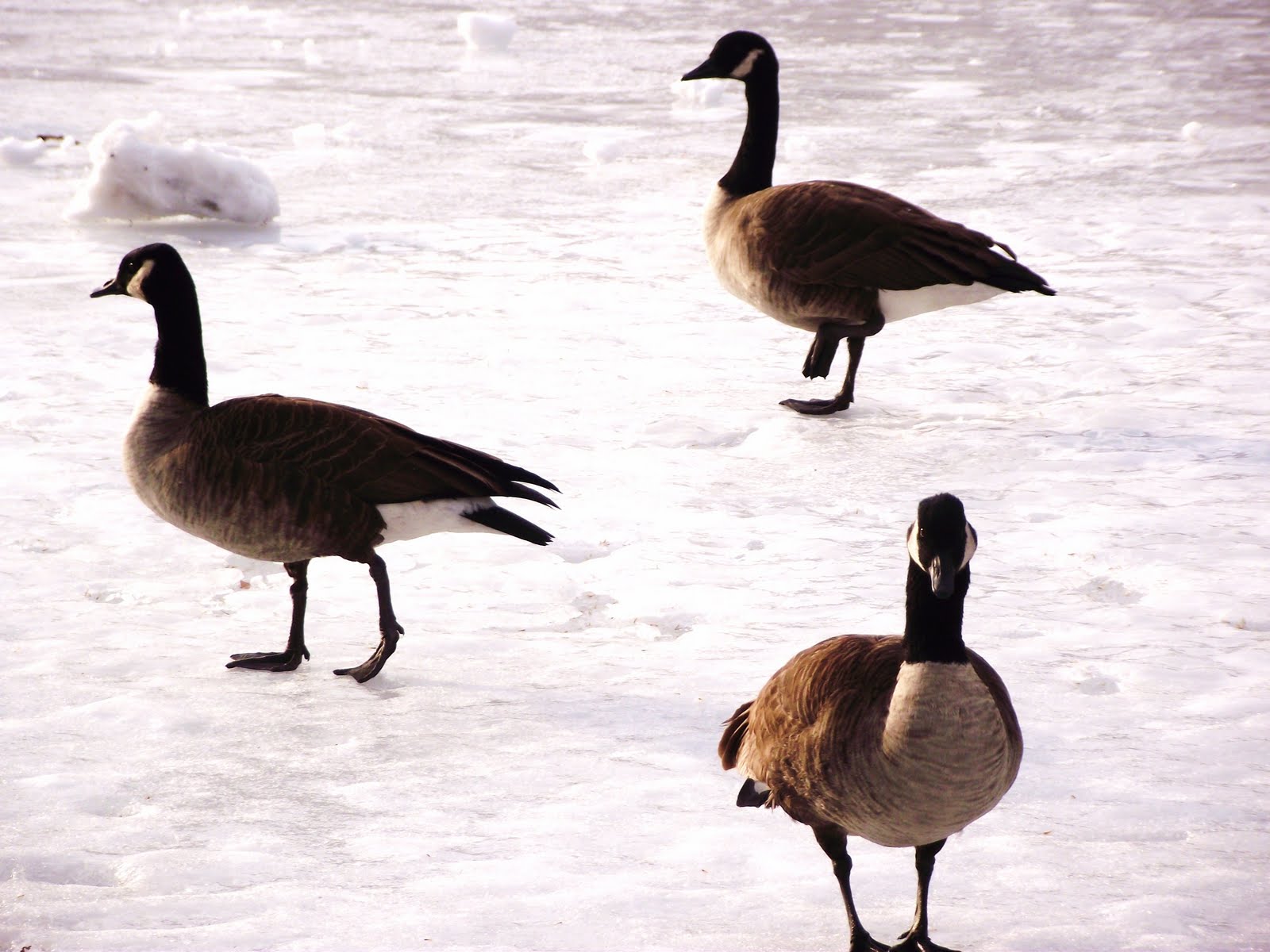
(Photo:  Talking basketball or shooting geese while the world burns.)
 
I don't watch action or "hero" movies. 
 
I don't believe in Superman, Spiderman or that Bruce Willis will save us from the next catastrophe.
 
But, if ever we needed some real heroes, it is now.
 
But, we need them in leadership.
 
There are, of course very real and genuine heroes literally putting their lives on the line to walk into and try to work on what are surely death traps in Japan.
 
"The Fukushima Fifty" are a group of courageous, self-sacrificing souls doing everything they can to try and thwart a potential nuclear disaster of epic proportions. 
 
One cannot even imagine the kind of guts and fortitude it must require to walk into nuclear plants spewing out toxic radiation and on the verge of meltdown. 
 
 How does one beat down the normal instinct to survive?  How does one embark on what surely is a suicide mission?
 
Not being any kind of hero, I cannot answer those questions.   I can only thank God there are people willing to put themselves in such horrid and likely lethal situation for the sake of humanity and the planet.
 
So yes, there are genuine heroes subjecting themselves to the tortures of the damned to try and save us.  But, these people are so far, nameless and faceless.
 
What about the heroes in leadership?
 
That, we tragically are not seeing.
 
It is almost one full week now since Japan has been hit with the triple catastrophe of earthquake, Tsunami and perhaps worst of all, threat of full blown nuclear disaster.
 
The first two of course were not preventable.  The third one was.
 
But, it is too late now to talk of,  "would haves, could haves, should haves." 
 
But, one truly wonders if the leaders of both, Japan and the United States have been somewhat "out to lunch" over the past week?
 
Almost as soon as the catastrophes occurred, I wrote in this journal that we needed to gather the greatest brains in the world and put them to work to figure a way out of the potential nuclear calamity.
 
But, did that happen?
 
It seems not.
 
Instead, we have been watching Japanese workers trying to drop buckets of water over the rapidly heating up nuclear reactors.
 
One nuclear physicist likens that to "trying to put out a forest fire with a water pistol."
 
We have the brave Fukushima Fifty trying desperately to get the reactors plugged into electricity once again with the hope that water can again be pumped into the systems.
 
But, what happens if this is not successful OR the workers are forced to vacate if the radiation becomes too intense to even attempt work in?
 
No one seems to have an answer to those questions.
 
All these unknowns.  And all the unfathomable consequences if these efforts ultimately fail.
 
Consequences that could be far worse than Chernobyl.
 
It is shocking and extremely disappointing that with all this chaos and human tragedy occurring, our President was talking basketball on Wednesday and entertaining Irish musicians yesterday at the White House.
 
I am second generation Irish.   And even I didn't go to the parade yesterday or bother to wear green.
 
Moreover, I am not the President.
 
Now there is talk of the U.S. sending in special and powerful hoses that could pump water into the reactors in a last ditch effort to prevent them from melting down.
 
Why did it take so long?
 
Because Japanese leadership didn't apparently ask for our help in this until now!
 
Well, maybe we should have suggested it a week ago.  Or, better yet, insisted on it to the best of our capabilities!
 
This is not after all, just about the people in the immediate vicinity of the reactors.  Its about the ultimate health of the earth, the oceans and the 7 billion people on this planet.  
 
Mind you, I am not even mentioning the flora, fauna and animals on the planet.
 
I am not even talking about the geese who one nation has targeting for destruction shortly following an earthquake ("Blame the geese!") and who are now the main subject of this blog.
 
We desperately need the leaders of this world and all the great brains to step up to the plate and avert what could be cataclysmic tragedy unlike any other we have known. We need them to learn from and use this tragedy to avoid future nuclear disasters (presuming we safely get out of this one).
 
Its not the time to talk basketball, listen to music, plan vacations or shoot and gas geese while the world burns.
 
Its the time for real leadership.
 
Its the time for heroes who can make the difference between averting a catastrophic crisis or falling headlong into one while we talked sports or shot at geese. -- PCA
 
 
                                                          **********
 

Thursday, March 17, 2011

"Blame it on the Geese!"


"Blame it on the geese!"
 
The above seems to be the rallying cry for all things gone wrong on planet earth.
 
Ah, that only we could blame earthquakes, Tsunamis and nuclear disasters on Canada geese!
 
Oh, but not to fear.  I am sure some genius is busy trying to figure out how to make those charges stick -- along with all the others.
 
If I sound a little bitter or sarcastic, it is mainly due to the frustration of googling current articles each day on Canada geese and finding only those that seemingly want to wipe the geese off the face of the earth.
 
The purpose of seeking current articles and information on geese (aside from personal knowledge) is to keep the newly created Facebook page on geese, relative and current:
 
 
However, I don't want to overwhelm the page with hoards of negative articles that advocate for hunting, culling, egg destruction and harassment of Canada geese, along with removing what little protections these animals have had.
 
The charges against the geese (and thus rationalizations for killing them) range from "overpopulation" to "airline threats" to "eating crops" to "pooping machines" to even being "aggressive" towards children.
 
All of them are ludicrous, especially the last one.
 
The latest in this barrage of tirades against the geese comes from New Zealand, a country who only last month, suffered an earthquake.  New Zealand just officially labeled the geese as "pests" and removed all protections of them.  Anyone can shoot or kill geese now in New Zealand without getting a permit. 
 
A couple of months ago, almost 200 Canada geese were beaten to death with boat paddles on a New Zealand lake.
 
It is hard to understand these vendettas and quite frankly, viciousness against a species of animal known for its extreme devotion to flock and family, intelligence, adaptability and perhaps most of all, Canada geeses' trust and sociability with humans.  They are, in fact, among the most peaceful and gentle animals on the planet.
 
But, less we point our fingers at any one country, the fact is, that Canada geese have seemingly become the latest target for humans to project our frustrations upon.
 
Whether it be our inability or unwillingness to construct "bird proof" planes (or use avian radar), our laziness to utilize 'goose poop" as grass fertilizer, our incompetence to adequately and responsibly protect the environment (and human life) or our monumental failures to peacefully coexist with the earth's other inhabitants, the geese are an easy and convenient target to project all these failings upon.
 
In one of the most bizarre articles ever read, ("The Goose Shoot Must Go On") on the very morning following the earthquake at Christchurch, New Zealand, a hunter brags of his and his buddies, shooting adventures of Canada geese:  http://www.nzherald.co.nz/nz/news/article.cfm?c_id=1&objectid=10710493
 
Is this all one could think to do on the very day one's country has been hit by a quake, people are suffering and a major city lies in near ruins?  
 
Add destruction to destruction?
 
Maybe it is me.  Maybe I just don't understand this so-called, "dog eat dog" world or the mentality that says its OK to kill every living creature that gets in our way or inconveniences us in some manner.
 
Maybe I don't understand the philosophy that says animals are only "valuable" or important to the degree we can "hunt, eat, wear, abuse for amusement or entertainment, kill for convenience, experiment on, or own."
 
I don't personally believe animals' place on this planet is only for the use, abuse and tyranny of humans anymore than I believe humans are on this earth for the abuse and enslavement of other humans.
 
As for those things that have gone wrong on planet earth, whether they be quakes, Tsunamis, nuclear meltdowns, plane crashes or poop on the grass, we need to seek real and responsible solutions, rather than "scapegeese."
 
Blaming all our troubles, failures and frustrations on the geese is not an option. 
 
Mother nature doesn't seem to be too sympathetic to that. -- PCA
 
 
                                                           **********


Wednesday, March 16, 2011

The Inevitable Challenges of Growing Up


(Photos:  Papa and Mama geese at Turtle Pond -- a pair again.   Papa goose pecking and pushing at one of goslings, with mate behind him.)
 
 
Below is one of many beautiful clips from "Winged Migration."
 
 
It reminds me of the recent sightings in Central Park.
 
As noted, many hundreds of geese temporarily stop over in Central Park during spring migrations which invariably take most of the birds to ultimate destinations as far north as Alaska.
 
Most of the migratory geese have vacated the park now, as the main migrations occur in middle and late February.
 
No geese presently on the Reservoir, North Meadow or Great Lawn.
 
What geese remain in Central Park now are mostly those "resident" geese who return here after wintering in places farther south and who, in some cases, I am familiar with.
 
"Papa and Mama" geese have returned to Turtle Pond with their four remaining grown goslings -- though the family dynamic is quite different now from what it was last spring when the goslings were newly hatched and raised at Turtle Pond.
 
Though living in the same location, the parent geese (like humans) are pushing out the now young adult "children" and requiring more "alone time."
 
Though the family still swims and grazes together, the parents and goslings appear to be resting in different locations at night and both, the gander and his mate, will at times, push and peck at the youngsters as if to say, "Its time for you kids to grow up and learn to be on your own!" 
 
The other night for example, the parent geese were resting on the small rock near the pier and the four goslings were gathered in the marshes not far away.
 
When, a few minutes later, the family came together on the pond, Papa goose pecked at and chased the goslings seemingly demanding that the parents be given their own space.
 
On most occasions when birds are observed being pushy, "dominant" or territorial with others, it is usually presumed to be mating behavior.  But, in some cases, it might actually just be a case of parent birds insisting that their grown "teenagers" grow up and become more independent.   We see this behavior in mother cats who sometimes become what appears to be "combative" with grown kittens.
 
I guess there comes a time in all species (including humans) that babies have to be ultimately "pushed from the nest," so to speak. 
 
Though in geese, the family unit remains very strong (and might even serve to keep other geese out of a particular area), that is not to say the family with adult goslings actually remains together 24/7 or that all is forever tranquil.  The ganders seem to "rule" with a very strong wing -- literally -- and call most of the shots along with their mates.
 
It of course is likely too, that the parent geese might seek to breed again.
 
I am seeing this same kind of dynamic at Harlem Meer.
 
During the day, most of the geese are swimming in peaceful groups (or families) on the lake or grazing on grass.
 
But, at night, the geese (and mallards) are paired off.
 
Any geese who tread too close to a mated pair (whether family or not) will get chased off quite vigorously by the gander.
 
Spring brings with it, its own special challenges to the geese and other migratory waterfowl.
 
But, aside from the obvious stresses and dangers of actual migration, there are the challenges of either finding a mate or, in the cases of youngsters from the previous year, those of just growing up and either finally leaving -- or being kicked out of the nest. 
 
Nature can be brutal -- but at the same time, wondrous and endlessly fascinating.  -- PCA
 
                                                             *******


Tuesday, March 15, 2011

Note -- Photo of Crippled (fishing line) Goose referenced earlier

With regard to today's earlier blog posting "Things to Do," the wrong photo was posted.
(Photo was in different memory card.)
 
This is link to the actual photo of crippled goose posted on Flickr.  
 

"Things to Do"


(Photo:  Canada goose from Harlem Meer last summer.  Crippled from fishing line ensnared around leg.)
 
Although the ice only melted on Central Park's lakes and ponds over the past couple of weeks, the hobby "fisher" people are already out with their long lines and polls.
 
Neither the fish nor the birds nor the turtles catch much of a break.
 
I have of course been critical of the so-called, "Catch and Release" fishing in Central and other parks and this might make one appear like some sort of "fanatic" to some.
 
After all, what could possible be wrong with the "fun" catching of a few fish and throwing them back in the water?
 
Aside from the obvious distress to the fish for what is trivial and questionable cause, there are the issues of birds caught in fishing lines, turtles accidentally caught, dead fish thrown back in the water and dead fish illegally taken out of the park or even given away to passing kids -- all of which, I have personally witnessed.
 
And although park "rules" dictate that the fisherman (or kids) shouldn't be "casting"  back the long lines (and possibly injuring passers-by), casting is done all the time. In fact, I almost got hit by a line being cast when coming out of Lasker swimming pool at 9 PM last summer.
 
The fishing takes place at Harlem Meer long into the nights of spring, summer and fall.  One woman told me the fishers are out in the summer until the park closes at 1 AM -- something that did not at all surprise me.
 
So no, I am no fan of the fishing in the parks.  In fact, even in the places the fishing is not allowed (such as Turtle Pond) it still occurs. 
 
It is up to aware park goers to notify park officials when seeing fishers at Turtle Pond and other off limits areas.  Any fishing there is particularly harmful to the turtles and other wildlife at Turtle Pond.
 
That turtles, birds and other delicate wildlife also exist at Harlem Meer doesn't seem to bother park officials.   When asked why the fishing is allowed at the Meer, I was told by a park ranger that the people of the community need "things to do."
 
Of the list of "things for people to do," I don't believe that menacing waterfowl, fish and wildlife should be one of them.
 
But, of course that is just my opinion.
 
Or, at least so I thought until learning that "overfishing" is not just an issue in our local parks, but in fact, a global and oceanic issue of very serious proportions.
 
A couple of weeks ago, in one of the exotic animal segments of "The Tonight Show," we were informed that most species of Penguins are now "endangered" due to humans overfishing the waters.
 
It seems the penguins are in competition with humans for their supplies of sardines and other small fish to eat.
 
Are humans really dependent on sardines to live? 
 
Well, the penguins are.
 
This morning on "The Today Show" actor, Ted Danson, who has written a new book about abuse of the oceans also talked about the perils of overfishing and the very real possibility of wiping out most of the oceans fish species by the end of this century:
 
 
Scary stuff to hear. 
 
But, is it really so "far fetched" or "hysterical?"
 
When one understands the delicate interconnection of species and fragile web of life, its not far fetched at all.
 
Just as other species of birds are often reliant on the wariness and protectiveness of Canada geese, all other species are interconnected in various ways.  Destroy or take out one of the "links" of life and it affects everything else.
 
We are currently witnessing the potentially devastating effects of overestimating our abilities to control both nature and the nuclear technologies we create to "manage" the earth's energy resources.
 
Last year we witnessed the wide and long range destruction associated with deep water oil drilling gone wrong.
 
It seems that on the list of "things to do," we need to seek ways to conserve, respect and protect the earth's irreplaceable resources, rather than squandering, plundering and ravaging them -- often for trivial and questionable cause.
 
Whether the small fish in park lakes, the geese and pelicans in the skies or the great whales, dolphins and penguins of our oceans, its past time to recognize our role on this planet as stewards of the earth, rather than plunderers and destroyers of it.   -- PCA
 
                                                           ******


Sunday, March 13, 2011

In the Midsts of Chaos, Life Goes On....


It is a bright, crisp and beautiful Sunday in New York City, giving no hint of the devastation and horror on the other side of the world.
 
What a week it has been.
 
From celebrity meltdowns on national TV, to floods, to earthquakes, a Tsunami and, perhaps worst of all, the threat of nuclear meltdowns.
 
It reminds one of how truly fragile and unpredictable life really is.
 
All the things we take for granted or fret about and all the little things that irk us throughout a day. What does it all mean in the final scope of matters?
 
It is impossible to imagine what the people of Japan must be experiencing right now.  For those fortunate enough to survive the earthquakes and Tsunami, there is the destruction around them, the loss of thousands of lives, economic devastation, power and food shortages and the fear of just whether the nuclear power plants can be prevented from blowing up or melting down.
 
Though it might seem that nothing can equal the forces of nature's wrath when it goes against us, the combination of natural forces and facilities created from human hands have potential for cataclysmic results far beyond any one country.
 
Is it, in fact, actually possible at this time to build nuclear plants that can withstand the possibilities of large quakes, Tsuamis or, in the case of war, an atom or nuclear bomb?
 
Certainly, it seems well past the time that we need to nurture and gather the greatest brains in the world to try and tackle these questions.  The future of all life on earth could ultimately depend on it because, after all, even flying birds could not escape the effects of toxic radiation in the air. 
 
That "brain" power however, is not mine. 
 
In effort to feel some sense of "normalcy" in all this chaos, last night I walked my dogs over to Turtle Pond in Central Park.
 
The evening was quiet, peaceful and lovely.
 
I was hoping to see the family of geese who have returned to Turtle Pond over the past week or so.  The "family" consists of the two parent geese and their now grown four goslings who will be a year-old this May.
 
There was the familiar and comforting sight and sounds of mallards on the pond.
 
And there were four geese resting peacefully on the small rocks inside the pond, not far from the little pier that bird lovers flock to see the waterfowl.
 
The same little rocks that one frequently saw the family sunning themselves last summer.
 
Standing on the little pier, under the moonlight of a sweet, crisp evening, some of the mallards and all four of the geese lazily swam towards me, presumably seeking some treats or just to say, "hi."
 
It occurred to me that these were most likely the four goslings ("teenagers," really) who were apparently left on their own temporarily while the parents went off for a romantic night together or might even be replenishing the old nest from last year.
 
"Hey, guys, you all by yourselves tonight?  Did mommy and daddy go off for a romantic interlude?"
 
The youngsters didn't tattle on their parents. But, I could tell by their relaxed behavior and posture that my guess was probably correct and that this was not the first night the gown "kids" were safely left to their own devices. 
 
I don't know of course, but am guessing that the parent geese are seeking to breed and raise young again.
 
It is however, highly unlikely that will be allowed to occur again, considering the goose egg addling program that is in place at Central Park and other areas.  I am sure that by this time, park workers are busy figuring out way to get to and oil any eggs that mama goose might lay.
 
As previously noted, "egg addling" is something I am quite conflicted about. 
 
While certainly preferable to rounding up and gassing Canada geese, I fail to see the "need" for egg destruction considering the small number of "resident" geese who actually stay in Central Park.  As noted too, it is highly stressful to the parent geese who end up sitting on eggs (or guarding a nest) in which the babies never hatch. 
 
So, no, I am not in favor of egg addling at this time.
 
Am sick of having to "appease" and placate to people like that animal-phobic couple from last week or an airline industry that won't take proper responsibility for "bird proofing" planes or using avian radar.
 
Its like building nuclear power plants that can't safely withstand the potential forces of large quakes, Tsunamis or even man-made bombs.
 
It is never really option to declare "war" on nature and hope that you can win or even outwit its forces and power in the end.
 
Like the geese, we have to find ways to live in harmony with nature, anticipate its potential dangers and ultimately "adapt" to its changes and challenges.  -- PCA
 
 
                                                               ********
 

Saturday, March 12, 2011

Disaster Preparedness


Sympathy, support and prayers go out today to the people of the Japan and the devastation suffered from yesterday's earthquake and Tsunami. 
 
The true horror of (literally) earth shaking events like these are beyond the imagination.
 
And yet, despite what will undoubtedly be a high death toll, reality is that it could be so much worse if not for the earthquake preparedness of Japan. This is evidenced by an early earthquake warning system and construction of buildings able to withstand impact of an 8.9 quake.   Apparently, the people of Japan have even been yearly drilled for quake preparedness. 
 
Japan, in fact, deserves much praise and serves as model for disaster preparedness for other countries of the world.
 
The focus of this journal is, however, animal and wildlife issues.
 
While a quake on the other side of the world might not seem relevant to the issues faced in the states regarding our relationship to wildlife and avoidance of bird and airline collisions, there does seem to be relevance and questions to be raised.
 
For example:  If humans are able to construct tall buildings able to withstand the impact of powerful earthquakes, how is it that we are not able to build planes able to safely withstand collision with a ten pound bird?
 
The question almost seems laughable and unreal.  And yet, it is an inconvenient truth..
 
More than once, airliners have crashed or had to emergency land after hitting only one bird.
 
In the case of flight 1549, the airliner that landed in the Hudson (and has served as excuse for killing thousands of Canada geese), it was only two birds that supposedly "caused the engines to fail."  (Of course the engines were already compromised before heading into the skies that fateful day, but that is a whole other issue.)
 
We are talking about birds as small as sea gulls or even a flock of starlings able to literally "take down" airliners that weigh many, many tons!  How is that even possible?
 
It is truly remarkable and awe-inspiring that humans can construct tall buildings able to withstand powerful earthquakes.
 
By contrast, it is borderline disgraceful that we cannot build a plane able to withstand collision with a bird.
 
It seems to be a case of having -- or not having the will to do something.
 
Obviously, we don't have the option of altering the earth's "fault" plates or oceans in order to avoid earthquakes or Tsumanis.
 
But, we can construct better buildings.
 
But, nor should we think we have the option of killing billions of birds rather than building better planes.
 
Additionally, if we have the technology to "early warn" of earthquakes, why aren't airline industries using the available technology (avian radar) to warn of birds passing through air space?
 
Is it simply easier to shift responsibility to cities to "solve their bird problems" rather than using and developing state of the art radar systems to "early warn" of bird flyovers?
 
I realize these questions may sound like, "Hey, if we can send a man to the moon, why can't we cure the common cold?" but, in fact, they are not.
 
"Necessity is the mother of invention," as the saying goes.
 
We find ways to minimize human death tolls in times of natural disasters because we can't alter weather or the earth's plates.
 
And so too, should we find ways of minimizing casualties (both human and animal) in times of conflicts with nature.
 
Our "war" is not with nature itself. 
 
Rather, our imperative is to seek ways to responsibility cope with the challenges nature throws out to us whether in the forms of storms or earthquakes -- or a flock of seagulls in the sky.  --- PCA
 
                                                                ******